

If you are thinking about buying or financing a home, it helps to know what the process actually involves before you reach out to anyone. Working with a mortgage broker in Missouri is mostly a matter of preparation, clear communication and steady follow-through. Here is how the path usually runs, so nothing about it comes as a surprise.
Step one: a plain conversation about your goals
The first call is not an application. It is a chance to talk through what you want to do, whether that is buying a primary home, buying an investment property, or financing something that does not fit a standard file. A good mortgage broker asks about your timeline, your monthly budget and any income that is hard to document. You should leave that call knowing which programs are worth a closer look and which are not.
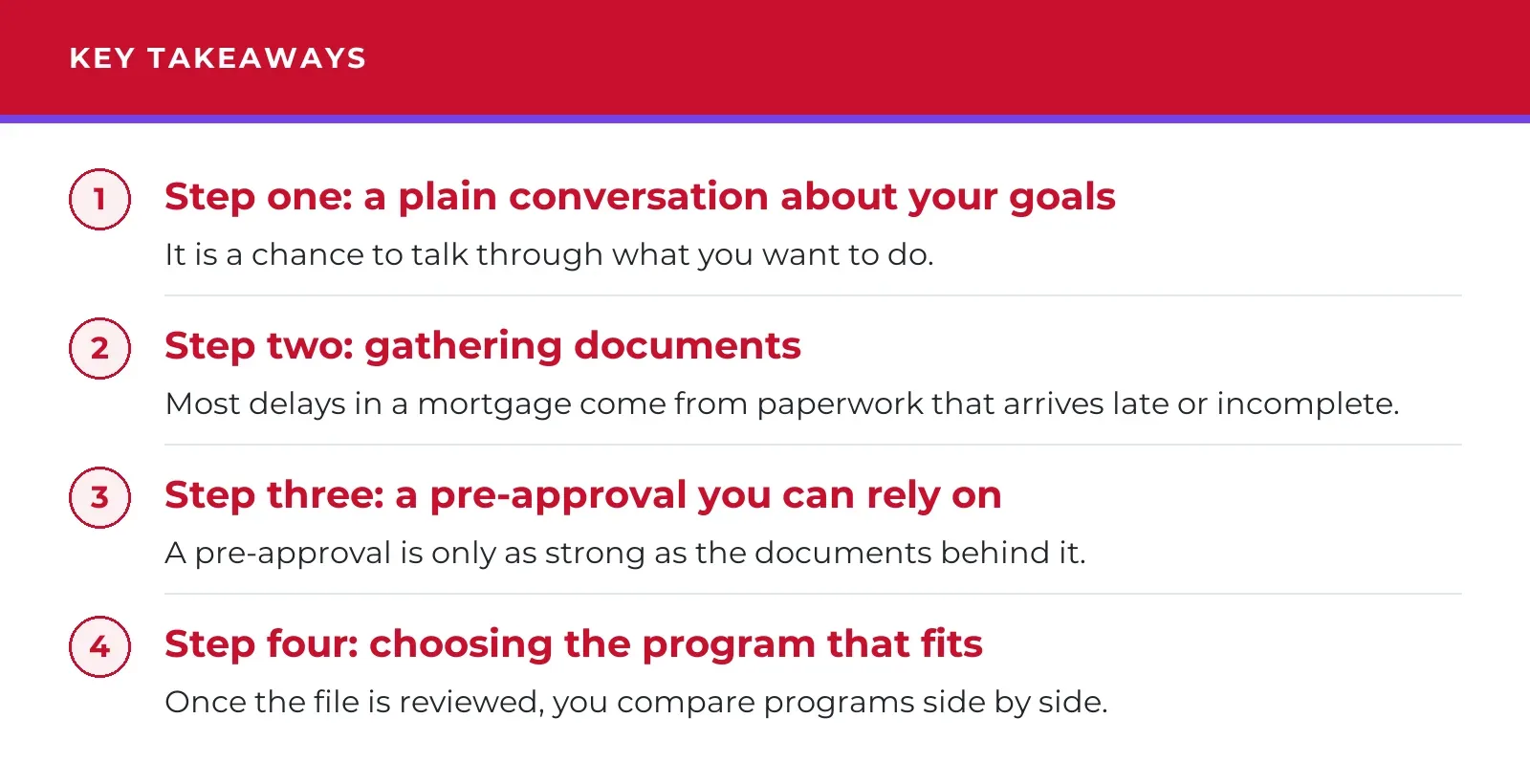
Step two: gathering documents
Most delays in a mortgage come from paperwork that arrives late or incomplete. The list depends on the loan. Salaried borrowers usually provide recent pay stubs, W-2s and bank statements. Self-employed borrowers may provide tax returns, or on some Non-QM programs, several months of bank statements. Real estate investors using a DSCR loan will typically need a lease or market rent estimate for the property. Veterans will need to confirm eligibility. Collecting these early saves days later.
Step three: a pre-approval you can rely on
A pre-approval is only as strong as the documents behind it. When your income, assets and credit have been reviewed up front, a seller and their agent have more reason to take your offer seriously. It also tells you what monthly payment the numbers support, which is more useful than a single maximum loan amount.
Step four: choosing the program that fits
Once the file is reviewed, you compare programs side by side. VA loans suit eligible veterans and service members. Bank statement loans suit business owners whose tax returns understate their income. DSCR loans suit investors who want the property income to carry the loan. Each has its own documentation, down payment and reserve expectations, and the right choice depends on your situation rather than on a general rule.
Step five: processing, appraisal and underwriting
After you choose a program and go under contract, the file moves through processing. An appraisal is ordered, the title company begins its work, and an underwriter reviews everything. Expect a few follow-up requests. A short explanation for a large deposit or a new letter from an employer is routine. Answering quickly keeps the file moving.
Step six: protecting your approval until closing
Between approval and closing, keep your finances steady. Avoid opening new credit accounts, financing a vehicle or moving money between accounts without a record. If something changes at work or in your household, tell your mortgage broker right away so it can be handled before it reaches underwriting.
Why local knowledge matters
Missouri covers a lot of ground, from the Lake of the Ozarks to the areas around Whiteman Air Force Base and Fort Leonard Wood, along with Jefferson City, Springfield, Joplin, and St. Joseph. While the state's largest metro areas include Kansas City and St. Louis, every local market has its own property types, timelines, and expectations. Working with someone who helps borrowers across Missouri means those details are part of the conversation from the start.
Start with a conversation
Dan Pfenenger, a Navy veteran and mortgage broker, helps Missouri borrowers with VA loans and Non-QM options including DSCR, bank statement and self-employed financing. Call (573) 761-7400 or send Dan a message to talk through your plans.
This is not a commitment to lend. All loans are subject to credit approval and underwriting. Programs and terms can change. Dan Pfenenger, NMLS #2767718. UMortgage powered by Nexa Lending, Company NMLS #1660690. Equal Housing Opportunity.